
Navigating U.S. immigration just got more complex for foreign nationals seeking a green card through adjustment of status. Starting **September 18, 2026**, applicants will face significantly closer scrutiny regarding their finances and past use of government benefits under new public charge rules.
This crucial change comes as the U.S. Citizenship and Immigration Services (USCIS) updates its guidance on the public charge ground of inadmissibility, rescinding previous 2022 regulations. The new guidelines, stemming from a DHS final rule published on July 20, focus on an applicant’s potential to become a “public charge” in the future.
Key Changes to Public Charge Rules Effective September 18, 2026
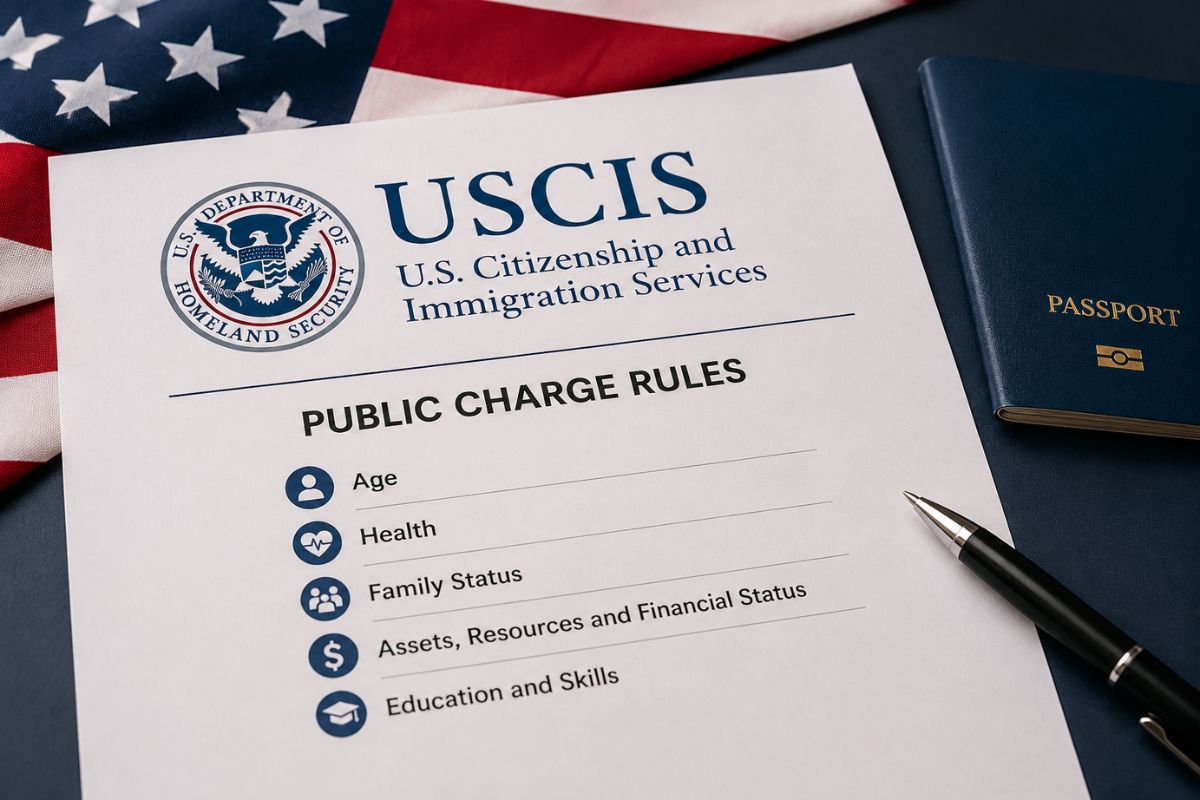
The updated public charge rules will apply to all Form I-485 applications that are submitted or postmarked on or after September 18, 2026. USCIS officers will evaluate whether an applicant is likely to become a public charge at any point in time. This assessment will utilize five statutory factors:
- Age
- Health status
- Family circumstances and size
- Financial resources, assets, and overall economic status
- Education and skills possessed
Additionally, officers will consider Form I-864, the Affidavit of Support, along with any other pertinent evidence presented in the applicant’s record.
Expanded Scrutiny on Government Benefit Usage
Perhaps the most significant practical change lies in how USCIS will assess an applicant’s history with means-tested public benefits.
For benefits received **before September 18, 2026**, the focus will remain on public cash assistance for income maintenance and long-term institutionalization at government expense.
However, for benefits received **on or after September 18, 2026**, USCIS will broaden its scope to include a wider array of means-tested benefits. This can include, but is not limited to, housing assistance, food stamps (SNAP), and certain types of financial aid.
It’s important to note that the assessment remains individualized and case-by-case. USCIS emphasizes that officers will consider the applicant’s “totality of circumstances” rather than making decisions based on a single factor.
Who Do the New Public Charge Rules Affect?
Most individuals applying for adjustment of status to become a lawful permanent resident are subject to the public charge ground of inadmissibility, unless their specific immigration category is explicitly exempt.
This includes a broad range of categories, such as:
- Spouses, children, and parents of U.S. citizens
- Family members of lawful permanent residents
- Skilled workers and other employment-based visa holders
- Professionals and investors
- Religious workers
A substantial list of exemptions remains in place for vulnerable populations, including:
- Refugees and asylees
- Victims of human trafficking (T visa) and certain crimes (U visa)
- Special Immigrant Juveniles
- Applicants for Temporary Protected Status (TPS)
- VAWA (Violence Against Women Act) self-petitioners
- Several humanitarian immigration categories
For applicants from countries like India, the critical factor is not nationality, but rather their specific immigration category. An Indian passport holder pursuing adjustment of status in the U.S. will be impacted if their category falls under these public charge guidelines.
Understanding the Public Charge Bond Option
If an applicant is found inadmissible solely on public charge grounds, USCIS may offer an option to post a financial bond. This “public charge bond” can be submitted as cash or through a Treasury-certified surety company using Form I-945.
The potential bond amount will be determined by USCIS, taking into account the estimated government assistance the applicant might be eligible for over the subsequent five years.
Applicants cannot proactively submit a public charge bond. USCIS must first issue a Notice of Intent to Deny, inviting them to post the bond.
Crucial Implications for Green Card Applicants in the U.S.
For foreign nationals, including those from India, who are already in the U.S. and pursuing permanent residency via adjustment of status, the September 18, 2026, effective date is highly significant. Applications submitted from this date forward will undergo assessment under these new, stricter guidelines.
This policy shift underscores a clear trend: U.S. immigration screening is placing increased importance on an applicant’s demonstrable financial self-sufficiency. This makes comprehensive documentation of financial history, income, and individual circumstances more critical than ever for adjustment-of-status cases.
Expert Insight: Preparing for the New Rules
This change represents a stricter, yet manageable, evolution in U.S. immigration policy. Applicants planning to file their green card application on or after September 18, 2026, should meticulously review their finances, history of government benefit usage, and all supporting evidence to ensure compliance with the updated public charge regulations.
Leave a Reply