
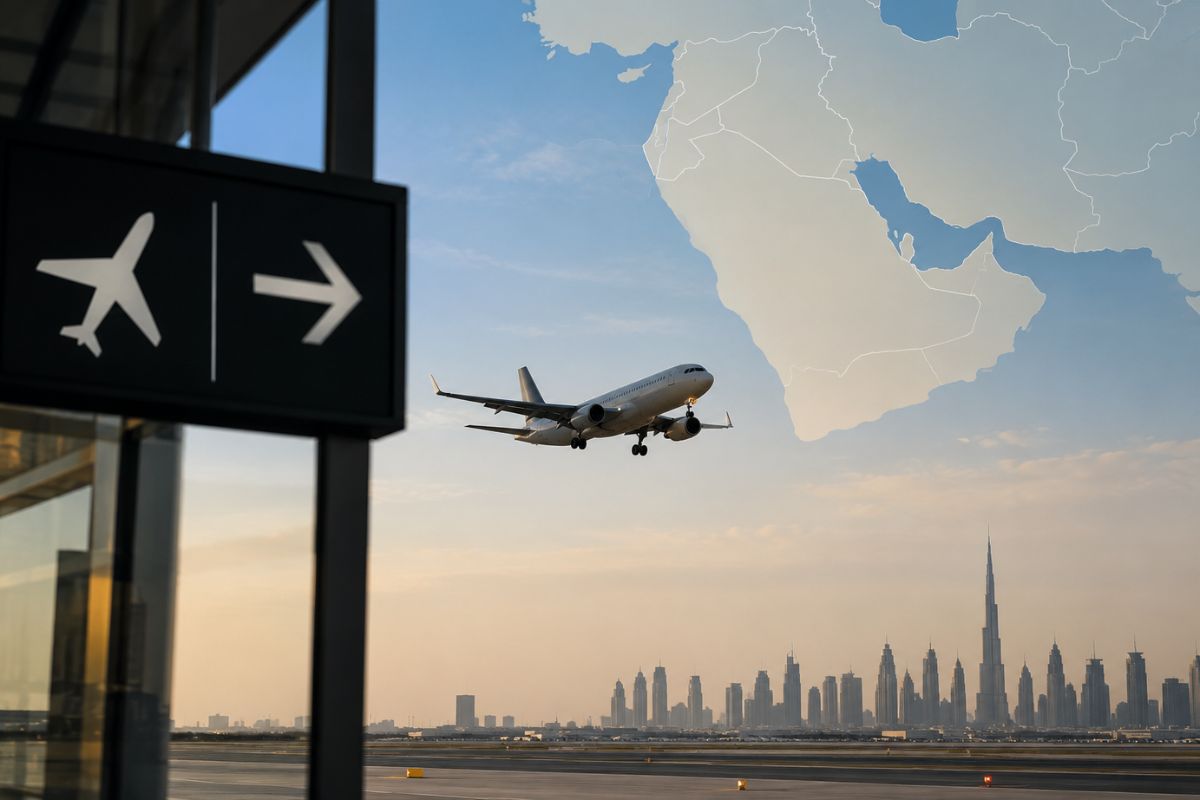
Middle East Travel Advisory: Flights Stabilizing Amidst Ongoing Disruptions
Commercial aviation across much of the Middle East has largely stabilized following recent escalations involving Iran, Israel, and the United States. While most regional airspaces are open and airports are operational, airlines continue to adjust schedules, leading to some service suspensions.
The situation remains fluid. Travelers should be prepared for possible short-notice schedule changes, particularly on routes involving areas directly affected by the security situation.
Saudi Arabia Flights Operating, But Expect Possible Disruptions
Commercial flights to and from Saudi Arabia remain operational as of September 22. However, the risk of short-notice disruption has increased following the latest escalation.
Several international airlines continue to suspend services or delay their return to parts of the region, including southern Saudi Arabia. Flights involving Abha and Taif may be particularly affected, with further changes possible.
For travelers, it is now more critical to check directly with the airline before leaving for the airport, rather than relying solely on the original booking schedule.
Gulf Airspace Operations Remain Uneven
Most Gulf airports are operating, but intermittent airspace restrictions have previously affected commercial aviation across Bahrain, Iraq, Jordan, Kuwait, and to a lesser extent, Qatar.
Airlines have responded by suspending, reducing, or modifying services to affected destinations. Abha International Airport has also suspended international flights, including services to and from the UAE.
The pattern is increasingly clear across the region: flights may be operating normally one day and face changes with little notice the next, emphasizing the need for vigilance.
Visa and Immigration Concessions for Affected Travelers
Several countries have introduced temporary measures for foreign nationals affected by travel disruptions.
India: Foreign nationals whose travel has been disrupted and who need a visa extension or help regularizing their stay have been advised to contact their nearest Foreigners Regional Registration Office (FRRO).
Netherlands: Foreign nationals unable to leave the Schengen Area because of disruptions linked to Iran may apply for a short-stay visa extension for the duration of the impediment, subject to a maximum of 90 additional days and an overall 180-day stay limit. Other concessions cover entry visas and certain documents affected by disrupted consular services.
South Africa: Temporary visa concessions cover foreign nationals affected by airspace closures involving several Middle Eastern countries. The measures are valid until November 30, 2026, or until travel resumes following a ceasefire, whichever comes first.
Other countries, including Israel and the UK, have also introduced or maintained measures relating to visa validity, entry, and consular services. Travelers should check the relevant government or consular post before acting on any concession.
Stricter Immigration Screening and Visa-on-Arrival Updates
Travel disruption is also affecting immigration procedures. Authorities in several countries have introduced tighter screening, requested additional documentation for some visa categories, and suspended visa-on-arrival facilities for certain nationalities.
Visa-on-arrival remains available at many border posts, but decisions can be discretionary and may vary by location and individual case. Travelers who can obtain a visa before departure are advised to do so.
Essential Advice for Travelers in the Middle East
Travelers in or heading to the Middle East should:
- Check airline and airport updates immediately before departure.
- Follow official government travel advisories.
- Allow extra flexibility for connecting flights and onward travel.
- Check visa validity if travel has been delayed.
- Contact the relevant embassy or consulate where registration or assistance is available.
Employers with staff in the region should also verify employee and dependent safety, maintain current visa and contact information, review upcoming business travel, and keep evacuation, relocation, and remote-work plans ready.
Key Travel Takeaways Amidst Middle East Uncertainty
While air travel is largely functioning, travelers should prioritize flexibility, check updates frequently, and secure visas in advance where possible during ongoing regional uncertainty.
Leave a Reply